







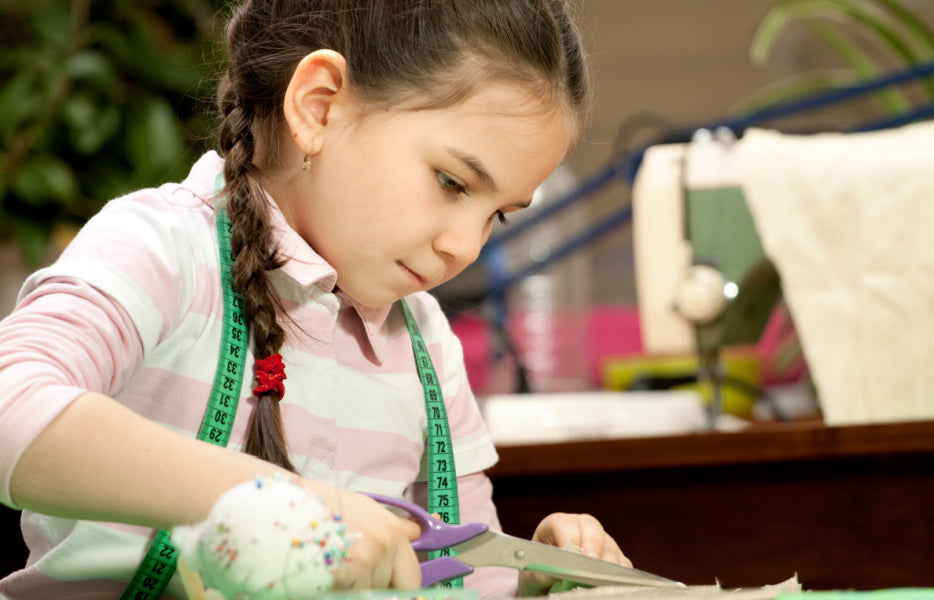


Organza is a lightweight, sheer fabric with a crisp structure and subtle shimmer. It is widely used in clothing, crafts, and home de cor, from structured sleeves and airy overlays to decorative table runners and gift wrapping, and its distinct quality is difficult to replicate with other fabrics.
At Cheap Fabrics, we stock a wide range of organza types to suit different projects and budgets. From our popular Plain Crystal Organza Fabric at £2.49 per metre to premium Silk Organza at £9.99 per metre, there is an option suited to every skill level and application.
In this guide, we cover what organza is made from, the types available, its key properties, how to work with and care for it, and how it compares to other popular sheer fabrics.
What This Organza Fabric Buying Guide Covers
WHAT IS ORGANZA FABRIC?
Organza is a lightweight, sheer, plain-woven fabric with a crisp texture and a subtle, light-catching finish. It is characterised by its stiff, slightly transparent hand, which gives it structure and volume without weight. This combination of sheerness and body is what sets organza apart from other sheer fabrics such as chiffon or voile.
Organza originated as a silk fabric, woven using tightly twisted yarns that produce its characteristic stiffness. Today it is produced in polyester, nylon, and other synthetic fibres as well, making it available at a much broader range of price points. The essential quality of the weave remains the same regardless of fibre content: a fine, open construction that allows light to pass through while holding its own shape.
The fabric is used extensively in bridal and formalwear, where its ability to add volume and structure without bulk makes it ideal for full skirts, dramatic sleeves, and layered overlays. It is also widely used in event decoration, theatrical costuming, and soft furnishings.
Organza fabric should not be confused with organdie, which has a similar appearance but is made from cotton and has a softer, slightly less crisp finish.
WHAT IS ORGANZA MADE FROM?
The fibre content of organza has a significant impact on its properties, price, and care requirements. Organza can be made from silk, polyester, nylon, or a blend of these fibres.
Silk Organza
Silk organza is the original and most prized form of the fabric. It has a natural sheen, a delicate hand feel, and a slightly irregular texture that adds to its character. Silk organza is breathable and drapes beautifully, but it is significantly more expensive than synthetic alternatives and requires careful handling. Our Silk Organza is made from 100% pure silk and is available at £9.99 per metre.
Polyester Organza
Polyester organza is the most widely available and affordable option. It closely mimics the crispness and sheen of silk organza while being far more durable and easier to care for. Polyester organza holds its shape well, is resistant to wrinkling, and is available in a wide range of colours and finishes. Most of the organza fabrics in our collection are polyester-based, starting from £2.49 per metre.
Nylon Organza
Nylon organza has a similar appearance to polyester but tends to be slightly softer and more pliable. It is less commonly used than polyester but appears in some specialist bridal and lingerie applications.
TYPES OF ORGANZA FABRIC
Organza comes in several distinct varieties, each suited to different applications. Understanding the differences helps you choose the right type for your project.
Crystal Organza
Crystal organza is the most widely used type. It has a plain weave, a crisp texture, and a subtle shimmer finish that catches the light. It is lightweight, semi-transparent, and holds its shape well. Crystal organza is used for bridal and occasion gowns, decorative overlays, draping at events, and a range of craft applications. Our Plain Crystal Organza Fabric is available from £2.49 per metre in a wide range of colours.
Silk Organza
Silk organza is woven from natural silk filaments and has a finer, softer hand than its polyester equivalent. It has a slightly matte finish compared to crystal organza, with a more subtle sheen and a more fluid drape. It is favoured for high-end bridal gowns and couture garments where natural fibre content and breathability are priorities. Our Silk Organza is 100% pure silk, 54 inches wide, and priced at £9.99 per metre.
Iridescent Organza
Iridescent organza has a two-tone or multi-tone colour effect created by weaving warp and weft threads in different colours. The result is a shifting, iridescent appearance that changes depending on the angle of light. It is particularly popular for costume design, event draping, and occasion wear where visual impact is key. Our Iridescent Organza Fabric is available from £2.49 per metre in multiple colour options.
Satin Organza
Satin organza combines the crispness of organza with a satin-weave face, giving it a higher sheen on one side and a slightly more structured body than plain crystal organza. It is often used for tailored bridal pieces, structured bodices, and shaped sleeves where both sheen and body are needed.
Embroidered Organza
Embroidered organza features stitched patterns on the sheer base fabric, typically in thread, sequins, or cutwork designs. It adds texture and decoration without adding significant weight, making it a popular choice for bridal overlays, evening tops, and statement sleeves.
Printed Organza
Printed organza features surface-printed designs on a sheer base, from florals and geometrics to novelty patterns. It retains the crisp structure of plain organza while adding visual interest. It works well for overlays, linings, and garments where the print will be visible through the sheer layers.
Dobby Organza
Dobby organza features a woven-in geometric or spot texture created by a dobby loom mechanism. The result is a subtly textured surface that adds depth without a printed effect. It is a more understated alternative to embroidered or printed organza and suits garments where texture rather than pattern is the priority.
OUR MOST POPULAR ORGANZA FABRICS
Below are four of our most popular organza fabric options at Cheap Fabrics. Each suits different projects and skill levels.
|
Item |
Recommended Uses |
Price |
|
Bridal and occasion gowns, event draping, overlays, crafts |
£2.49 per metre |
|
|
Occasion wear, costume design, event draping |
£2.49 per metre |
|
|
Costumes, layered skirts, occasion overlays |
£2.49 per metre |
|
|
Couture bridal, high-end eveningwear, fine dressmaking |
£9.99 per metre |
PROPERTIES OF ORGANZA FABRIC
Organza has a distinctive set of properties that make it immediately recognisable and useful for specific applications.
-
Crisp, Structured Hand - Organza holds its own shape without needing underlining or boning. This crispness allows it to add volume and structure to garments, making it ideal for full skirts, sculpted sleeves, and shaped overlays.
-
Sheer and Semi-Transparent - Organza is transparent to semi-transparent depending on its weight. This sheerness allows designers to create layered effects where one fabric shows through another, or to add delicate overlays without obscuring the garment beneath.
-
Subtle Shimmer - Most organza fabrics have a subtle, light-catching shimmer created by the tight twist of the yarns and the plain weave structure. This is particularly visible in crystal organza and iridescent varieties, making them popular for occasion and bridal use.
-
Lightweight - Despite its ability to add volume and structure, organza is very lightweight. Multiple layers can be used without the garment becoming heavy, which is why it is commonly used for tiered skirts and layered bridal gowns.
-
Stiff Drape - Unlike fabrics such as chiffon or silk, which drape softly and fluidly, organza has a stiffer drape that holds away from the body. This quality is useful where shape and silhouette matter more than clinging to the figure.
-
Prone to Fraying - Organza frays easily at cut edges. Seams require careful finishing, typically with French seams, rolled hems, or serging. This is one of the reasons organza is considered a more challenging fabric to sew than fabrics with less open weave structures.
ADVANTAGES OF ORGANZA FABRIC
Organza offers a combination of properties that few other fabrics can replicate at the same price point.
-
Adds volume and structure without weight - No other lightweight fabric adds as much shape and body as organza. Multiple layers can be used to build dramatic silhouettes without adding bulk to a garment.
-
Widely available at affordable prices - Polyester organza is one of the most cost-effective fabrics for achieving a formal, structured finish. Options start from £2.49 per metre at Cheap Fabrics.
-
Holds its shape well - Organza maintains its structure throughout the life of a garment and resists collapsing, which is particularly valuable for bridal gowns and formal wear.
-
Versatile across a range of applications - From bridal gowns and theatrical costumes to event draping and soft furnishings, organza adapts well to many different contexts.
-
Available in a wide range of colours and finishes - Organza comes in plain, iridescent, printed, embroidered, and metallic finishes, making it easy to find the right look for any project.
-
Suitable for layering - Because organza is lightweight, it can be layered over other fabrics to add texture, depth, and visual interest without significantly changing the weight or drape of the base garment.
DISADVANTAGES OF ORGANZA (AND FABRIC ALTERNATIVES)
Organza is a beautiful fabric but it does have some limitations. Understanding these before you buy will help you choose the right material for your project, or find a suitable alternative where needed.
-
Difficult to sew for beginners - Organza slips easily on the cutting mat, frays at the edges, and shows every pin hole. It requires sharp scissors, a fine needle, and a steady hand. If you are new to dressmaking, a woven fabric such as crepe or polycotton will be far more forgiving while you build confidence.
-
Prone to fraying - The open weave of organza means raw edges fray quickly if left unfinished. French seams, rolled hems, or a serger are strongly recommended for any garment or project where the edges will be exposed. This adds time to construction and requires more technical skill.
-
Can feel stiff or scratchy against the skin - Polyester organza in particular lacks the softness of natural fibres. For garments worn directly against the skin, lining the fabric is recommended. If comfort is the priority, silk organza offers a noticeably softer feel, though at a higher price point.
-
Stiff drape not suited to all designs - The structured, airy drape of organza works well for full skirts and formal overlays but is not suitable for designs that need soft, fluid movement. If you need a fabric that flows and drapes close to the body, chiffon or viscose would be a better choice.
-
Requires careful pressing - Organza is heat-sensitive, especially polyester varieties. Pressing at too high a temperature can cause shiny marks or melt the fibres. Always use a cool iron and a pressing cloth, and test on a spare piece of fabric before pressing a finished garment.
IS ORGANZA EASY TO SEW?
Choosing organza fabric for dressmaking is not straightforward. Its sheer, slippery surface makes it difficult to cut accurately, and the open weave means edges fray quickly if not finished properly. Most experienced sewers would classify it as an intermediate to advanced fabric.
When sewing organza, use a sharp microtex needle in size 60 or 70, and reduce stitch length to around 2mm to prevent puckering. A thread that matches the fabric weight, such as a fine polyester thread, will give a cleaner finish than a thicker thread.
For cutting, lay the organza on a cutting mat and use pattern weights rather than pins where possible. Pins leave visible holes in the fabric, so if you must use them, place them only within the seam allowance. Some sewers find it helpful to cut with a layer of tissue paper beneath the fabric to prevent slipping.
If you are keen to work with organza but want a slightly more manageable starting point, a heavier weight organza such as a satin organza will behave more predictably on the machine and require less handling care.
IS ORGANZA GOOD FOR SUMMER?
Organza can work well as a summer fabric when used as an overlay or outer layer, particularly for occasion wear and bridal designs. Its lightweight construction and open weave allow air to pass through, which helps prevent the garment feeling heavy in warm weather.
Polyester organza does not absorb moisture, however, which means it can feel uncomfortable when worn directly against the skin in hot weather. If breathability matters, pairing it with a natural fibre lining or choosing silk organza will give a more comfortable result.
For summer events, organza is a popular choice precisely because of its lightness and the way it moves in a breeze. Used as a skirt overlay or structured bodice, it looks effortlessly elegant in warm-weather settings.
IS ORGANZA FABRIC BREATHABLE?
The breathability of organza depends largely on the fibre content. Silk organza, made from a natural protein fibre, allows air to circulate and helps regulate body temperature, making it a genuinely breathable choice. Polyester organza, by contrast, does not absorb moisture or breathe in the same way, though its open weave does allow some airflow.
In practice, most organza garments are constructed with a lining beneath them, which means the organza layer itself sits away from the skin. This makes the breathability of the organza layer less critical in most wearable applications.
IS ORGANZA GOOD FOR BEGINNERS?
Organza is not recommended as a first fabric for beginner sewers. The combination of slippery handling, fraying edges, and visible stitching mistakes makes it a frustrating fabric to learn on. Most sewing teachers advise building confidence on woven cotton, polycotton, or crepe before moving on to sheers.
That said, if you are set on using organza, there are steps you can take to make the process easier. Stabilising the fabric with spray starch before cutting can help it behave more like a stiffer woven. Taping the fabric to the cutting mat is another technique that minimises shifting.
If you are a beginner who wants to try a sheer fabric, look for a slightly heavier weight option such as georgette, which has a similar lightweight quality but with more drape and less stiffness, making it easier to handle and sew.
WHAT CAN YOU MAKE WITH ORGANZA FABRIC?
Organza fabric uses span a wide range of formal, decorative, and creative applications. Its structure and sheer quality make it suited to a wide range of projects across fashion, costume, and interiors.
-
Bridal and occasion gowns - Organza is one of the most popular fabrics in bridal design. It holds its shape beautifully in full skirts, layered overlays, and structured bodices. Our Crystal Organza Fabric at £2.49 per metre is a popular choice for wedding and bridesmaid dresses.
-
Costumes and theatrical wear - The shimmer and structure of organza make it a staple in theatrical and costume design. Our Iridescent Organza Fabric and Snowdrop Organza Fabric both work well for fairy tale costumes, ballet tutus, and stage performances where visual impact matters.
-
Sleeves and overlays - Organza sleeves are a popular addition to formal dresses and blouses, adding a sheer, elegant quality without significant weight. Layered organza overlays on skirts create a floaty, multi-dimensional effect that works particularly well in evening wear.
-
Event and table decoration - Organza is widely used in event styling for chair sashes, table runners, and ceiling draping. Its lightweight construction makes large-scale decoration easier to manage, and the sheer quality adds elegance without overwhelming a space.
-
Gift wrapping and accessories - Organza is a popular choice for fabric gift bags, favour pouches, and ribbon bows. The sheer, crisp quality gives a premium feel to packaging without a high cost per metre.
HOW TO CARE FOR ORGANZA FABRIC
Always check the care label before washing organza, as the correct method depends on the fibre content. Polyester organza and silk organza have quite different care requirements, and treating them in the same way can cause permanent damage.
Polyester organza can generally be hand washed in cool water with a gentle detergent, or machine washed on a delicate cycle at 30 degrees. Avoid wringing or twisting the fabric. Reshape while damp and allow to dry flat or on a hanger away from direct sunlight.
Silk organza should be treated with greater care. Hand washing in cool water with a specialist silk detergent is usually recommended. Dry cleaning is the safest option for finished garments, particularly structured pieces where shape retention matters.
When ironing organza, always use the lowest temperature setting and place a pressing cloth between the iron and the fabric. Avoid steam on silk organza, as this can leave watermarks. Never place a hot iron directly on polyester organza, as it will melt or distort.
HOW TO IDENTIFY PREMIUM ORGANZA FABRIC WHEN SHOPPING ONLINE
Buying organza online means you cannot feel the fabric before it arrives. Here are six things to look for when assessing quality from a product listing.
-
Check the fibre content - A quality listing will clearly state whether the fabric is 100% polyester, 100% silk, or a blend. If no fibre content is given, ask before ordering. Fibre content affects the drape, feel, care instructions, and price of the fabric significantly.
-
Look for fabric weight information - Better retailers provide a weight in grams per square metre (GSM). A heavier organza will be more structured and easier to sew, while a very low GSM indicates an ultra-sheer, delicate fabric that requires more handling care.
-
Read the recommended uses - Reputable fabric retailers list suggested applications such as bridal wear, overlays, or event decoration. This helps you assess whether the fabric is appropriate for your project and gives an indication of how the supplier categorises its quality.
-
Assess the product photography - Clear, close-up photography helps you assess the weave density, sheen level, and overall finish. Be cautious with heavily filtered or styled images that make it difficult to see the actual fabric texture and weight.
-
Check the width and colour range - A wide fabric width reduces the need for seaming on large projects and is often an indicator of a more considered product. A broad colour range also suggests a supplier who stocks their range consistently, rather than buying in limited runs.
-
Order a sample - Before ordering multiple metres, always request a sample. This is the most reliable way to assess the true weight, feel, colour, and finish of an organza fabric. Any reputable retailer will be happy to send one.
ORGANZA VS OTHER FABRICS
Organza is often compared to other lightweight, sheer fabrics. Understanding the differences will help you choose the most suitable fabric for your specific project.
ORGANZA VS CHIFFON
Both organza and chiffon are sheer, lightweight fabrics, but they behave very differently. Organza has a stiff, structured hand and holds its shape, making it suited to full skirts, formal gowns, and structured overlays. Chiffon is soft and fluid, draping close to the body and moving freely. If you need structure, choose organza. If you need flow and softness, chiffon is the better choice. You can read more in our chiffon fabric buying guide.
ORGANZA VS TULLE
Organza and tulle are both used in bridal wear and costume design, but they have different constructions. Tulle is a net fabric with a hexagonal mesh structure, making it very voluminous and commonly used for petticoats and full skirts. Organza is a plain weave fabric with a finer, more refined appearance and a slight sheen. Organza is generally more suitable for outer layers and visible garment sections, while tulle is more often used to add volume beneath. You can learn more in our tulle fabric buying guide.
ORGANZA VS SILK
Silk is a broad category of fabric, and organza is one variety within it. Silk organza is made from silk fibres and retains the breathability and natural sheen associated with silk, while also having the crisp, structured quality that defines organza. When people compare organza and silk, they are typically contrasting organza with softer silk weaves such as silk satin or silk charmeuse. Those fabrics drape softly and feel luxurious against the skin, whereas organza holds its shape and offers a more architectural silhouette. You can read more in our silk fabric buying guide.
ORGANZA VS SATIN
Organza and satin are both associated with formal and bridal wear, but they offer very different qualities. Satin is opaque, has a smooth, glossy surface, and drapes in a soft, fluid manner. Organza is sheer, structured, and airy. The two fabrics are often used together in bridal and evening wear design, with satin providing the body and lining and organza adding lightweight volume, sheer sleeves, or decorative overlays. You can read more in our satin fabric buying guide.
IS ORGANZA THE RIGHT MATERIAL FOR YOU?
Organza is a specialist fabric best suited to specific applications. Before buying, it is worth thinking honestly about what your project requires and whether organza is the most practical choice.
Organza is likely a good fit if you are:
-
Making bridal or occasion wear - Organza is one of the most established fabrics in bridal design and performs beautifully in structured gowns, overlays, and formal occasion wear.
-
Creating costumes or theatrical garments - The shimmer and structure of organza make it ideal for stage costumes, character wear, and theatrical productions where visual impact from a distance is important.
-
Decorating for events or weddings - Organza is one of the most cost-effective fabrics for event decoration, from chair sashes and table runners to ceiling draping, with options starting from £2.49 per metre.
-
Looking to add an overlay or sheer layer to an existing design - Organza works particularly well as a top layer over a satin or crepe base, adding dimension and elegance without significant weight.
Organza may not be the right choice if you are:
-
A beginner sewer working on your first garment - The handling challenges of organza are significant for those new to sewing. Consider building experience on a forgiving woven fabric first.
-
Needing a fabric that is soft and comfortable against the skin - Organza is stiff and can feel scratchy when worn without a lining. For comfortable next-to-skin wear, a softer fabric such as viscose, crepe, or silk charmeuse would serve you better.
-
Looking for a fabric with soft, fluid drape - If your design needs movement and fluidity, organza will work against you. Chiffon, viscose, or georgette would give you the lightweight quality with the softness your project needs.
If organza sounds like the right fabric for your project, you can
browse our full range - we stock a wide selection of organza fabrics suitable for bridal wear, costumes, event decoration, and more. If you are unsure which is right for you, order a sample before committing to a larger quantity.


