









Is polycotton fabric for patchwork a false economy, or a smart way to quilt on a budget? Quilting has always had a traditional fabric of choice, and it is 100% cotton, but the blend has earned its place in plenty of sewing baskets, and it costs a good deal less.
In this guide we compare the two fairly, weigh up the trade-offs, name the best fabric for patchwork beginners and show you where to buy by the metre. And if you would rather feel a blend before you commit, you can order a sample from just 99p.
What This Guide Covers
- Is Polycotton Good for Patchwork and Quilting?
- Why It Works for Patchwork and Quilting
- The Trade-offs to Know
- Best Fabric for Patchwork Beginners: Polycotton or Cotton?
- Can You Mix Polycotton and Cotton in One Quilt?
- Tips for Quilting with It
- Best Patchwork Projects for Polycotton
Is Polycotton Good for Patchwork and Quilting?
So can polycotton be used for quilting? For a lot of projects, yes. It is a smart, affordable choice for practice blocks, kids' and utility quilts, cushion patchwork and charity makes, where durability and a low price matter more than a flawless seam. For a precise, heirloom quilt you will hand down, 100% quilting cotton is still the better fabric, because it presses crisper and pieces more accurately. Both have their place, so here is how they compare.
|
Quilting cotton (100%) |
Polycotton (65/35 blend) |
|
|
Cost |
Higher |
Lower, budget-friendly |
|
Pressing and precision |
Crisp, holds a fold |
Softer crease, less sharp |
|
Shrinkage |
More (pre-wash) |
Resists shrinking |
|
Durability |
Good |
Excellent, very hard-wearing |
|
Softness and feel |
Soft, matte, natural |
Smooth, slightly cooler |
|
Best for |
Heirloom and show quilts |
Practice, kids', utility and craft |
In short, reach for quilting cotton when accuracy and a keepsake finish matter most, and reach for the blend when you want a durable, wallet-friendly fabric for everyday makes. Many quilters happily use both, matching the fabric to the project rather than treating one as right and the other as wrong.
Our polycotton picks for patchwork
-
Plain Polycotton: a wide range of solid colours for blending with prints or building a simple colour scheme. Sold by the metre.
-
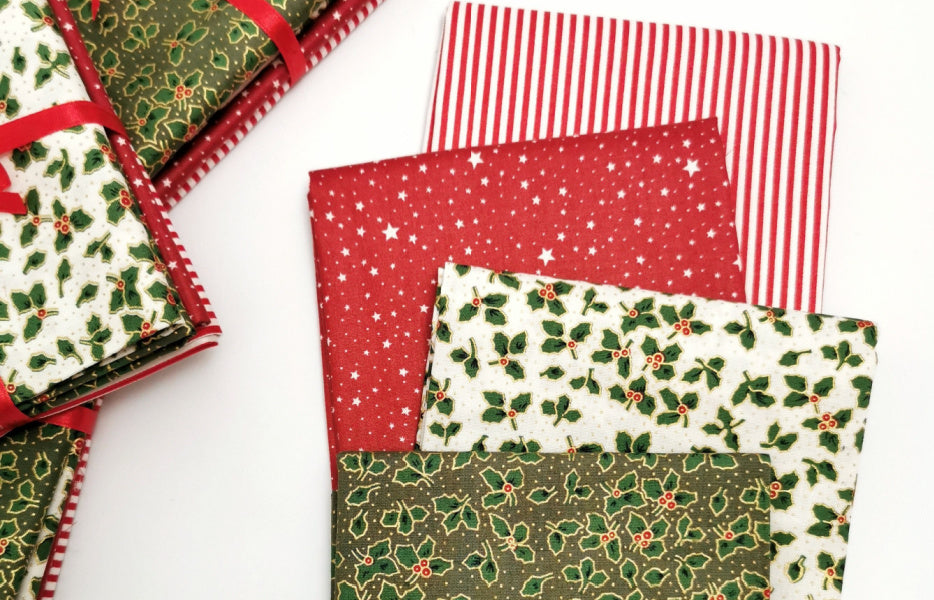
Spot, Star and Stripe Prints: small, regular patterns that suit little patchwork pieces.
-
Gingham Polycotton: a classic check in 14 colours and two sizes, just £2.99 per metre.
-
Fat Quarter Bundles: a ready-coordinated set of prints, handy for a scrappy quilt.
Prefer a keepsake finish? Browse our 100% cotton patchwork range too. Not sure which to pick? Order a 99p sample and feel the difference first.

Why It Works for Patchwork and Quilting
The appeal of polycotton for patchwork is mostly practical. Because it is a polyester and cotton blend, it costs less than pure quilting cotton, which makes it ideal for learning, for big projects that swallow metres, and for quilts that will be loved hard rather than framed. It is genuinely tough, so it stands up to constant use and washing, and the polyester content means it resists shrinking and holds its colour well.
Makers who use it are clear on where it shines. Poly-cotton blends are famously hard-wearing and a favourite for kids' drag-around quilts that survive forts, picnics and endless laundering. Add a huge range of affordable prints and a fabric that creases less and needs little ironing, and you have a forgiving, low-cost option that takes the pressure off a first quilt. And if you are wondering whether it will be warm enough, the warmth of a quilt comes mostly from the wadding in the middle, so a polycotton top and backing still make a perfectly cosy finish.
The Trade-offs to Know
It has real downsides too, and knowing them helps you choose. The blend does not press as crisp as quilting cotton, so very fine, points-must-match piecing is harder to get pin-sharp. It can pucker slightly at the seam, it is trickier to hand-quilt because the weave is denser, and over years of heavy use it can pill or beard a little where the wadding works through.
The other thing to know is shrinkage. Cotton and the blend shrink at different rates, so mixing the two in one quilt can pull it out of shape after washing. None of this rules it out; it simply suits durable, everyday quilts better than a precise heirloom piece. For a closer look at the differences, our polycotton vs cotton guide goes further.
Best Fabric for Patchwork Beginners: Polycotton or Cotton?
There is no single best fabric for patchwork beginners, but there is a right one for you. If you are learning the basics and want to keep costs down while you practise cutting and piecing, the blend is forgiving and cheap enough that mistakes do not sting. If you would rather make accuracy easier from the start, a beginner-friendly quilting cotton presses crisply and behaves predictably under the needle.
A sensible route is to practise your blocks on cheap plain polycotton or remnants, then invest in cotton for the quilt you really care about. Either way, a 99p sample and fabric by the metre keep the risk and the outlay low while you find your feet.
Can You Mix Polycotton and Cotton in One Quilt?
You can, and plenty of people do, but go in with your eyes open. The safest approach is to pre-wash everything first so any shrinking happens before you cut, and to accept that the two fibres will feel and drape slightly differently in the finished quilt. For a hard-wearing everyday quilt this rarely matters. For a precise heirloom piece, it is tidier to keep to one fibre type throughout, so the whole quilt shrinks and wears evenly.
Tips for Quilting with Polycotton
A few small habits make the blend behave:
-
Pre-wash first to deal with any shrinkage before you cut your pieces.
-
Use a sharp or microtex needle, not a ballpoint. Ballpoints are made for stretchy knits, whereas this is a woven fabric that a sharp point pierces cleanly.
-
Press with a cooler iron. Too much heat can glaze the polyester, so use a medium setting and a pressing cloth if in doubt.
-
Keep an accurate quarter-inch seam allowance so your blocks still come together neatly.
-
Choose a higher-cotton blend where you can, for a little more of that cotton handle.
-
Add wadding and the right tools, such as a rotary cutter and a walking foot, to keep your layers even.
Do You Need Interfacing for Patchwork?
Not for the quilt itself. A quilt is made of three layers, the pieced top, the wadding in the middle and the backing, and none of them needs interfacing. But it earns its place on plenty of patchwork jobs around the quilt, which is why most makers keep some in their kit.
There are four times it really helps:
-
Speed piecing - A printed fusible grid interfacing lets you lay out your squares, press them in place and sew the rows in one go, turning a fiddly block into a quick afternoon make.
-
Applique - A fusible web bonds a motif to a block before you stitch around it, so shapes stay put and the edges stay neat.
-
Stabilising light or slippery fabric - A lightweight iron-on interfacing gives thin polycotton a little more body, so pieces keep their shape and do not stretch as you sew.
-
Bags, cushions and table runners - These patchwork makes need structure that a quilt does not, and interfacing is what gives them their shape and hold.
A little goes a long way, so it is worth keeping some iron-on interfacing alongside your fabric for whenever a project calls for it.
Best Patchwork Projects for Polycotton

Polycotton fabric for patchwork earns its keep on makes that get used and washed. It is a natural fit for kids' and picnic quilts, for cushion and bag patchwork, for practice blocks and sampler quilts while you learn, and for charity or community quilts sewn in bulk, where a fat quarter bundle or a bulk buy keeps the cost right down. For the backing, a plain, inexpensive fabric does the job without spoiling the finish. Save your 100% cotton for the showpiece, and let the blend handle the everyday.
Ready to Start Your Patchwork?
Whatever you are making, polycotton is a durable, affordable patchwork and quilting fabric that is hard to beat for everyday quilts and craft. Shop cheap polycotton by the metre, browse the 100% cotton patchwork range for heirloom makes, and order a 99p sample to feel the difference before you buy.


